Don't miss our holiday offer - up to 50% OFF!

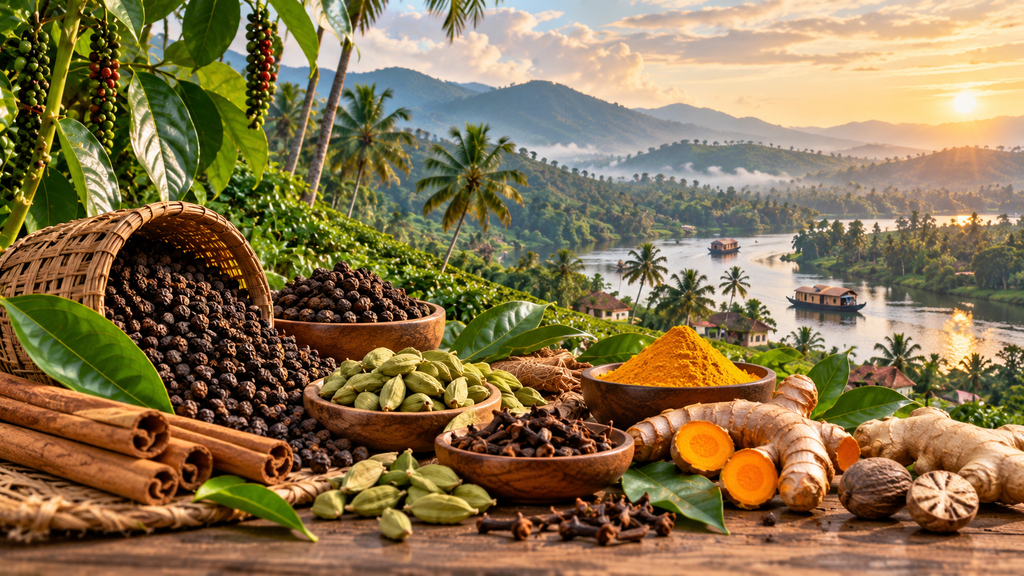
Kerala has been closely associated with spices for centuries. Known as the “Land of Spices,” the state has a unique combination of tropical climate, fertile soil, high rainfall and the Western Ghats, creating favourable conditions for cultivating some of India’s most valued spices. Black pepper, cardamom, ginger, turmeric, nutmeg, cinnamon, cloves and vanilla are among the important spices associated with Kerala. The Directorate of Arecanut and Spices Development identifies several of these as commercially important crops, while Kerala’s Idukki district is particularly recognised for cardamom and other high-value spices. But what makes Kerala spices different from ordinary spices? The answer begins with their origin and natural growing conditions. Quality is not simply about how strong a spice tastes. Aroma, colour, essential oils, pungency, freshness, processing and moisture levels all influence the final product. Research from ICAR-Indian Institute of Spices Research notes that essential oils, oleoresins and aroma or pungency compounds are important quality attributes in spices. Consider a simple kitchen caselet. You open two packets of black pepper and add the same quantity to a dish. One gives a sharp, fresh aroma almost immediately, while the other seems dull and requires more quantity to create the same flavour. That difference illustrates why sourcing and quality matter. Premium Kerala spices are valued because their natural characteristics can contribute both intense flavour and aroma to everyday cooking.
Why Are Kerala Spices Considered High Quality?
Kerala’s reputation for spices is supported by both its agricultural conditions and its long-standing spice trade. The state is a major producer of small cardamom, black pepper and nutmeg, while also producing ginger, turmeric, vanilla, cloves and cinnamon. Recent information from the Spices Board describes products such as Malabar Pepper and Alleppey Green Cardamom as sought-after spices, with several Kerala-origin spices also receiving Geographical Indication recognition. Does geographical origin really matter when buying spices? Yes, because growing conditions can influence characteristics such as aroma, essential-oil composition and flavour. Small cardamom, for example, is native to the evergreen forests of the Western Ghats and is cultivated in Kerala’s high-altitude regions. Its essential oils contribute to its distinctive sweet and warm aroma. Black pepper provides another strong example. ICAR-IISR identifies Kerala as part of the crop’s native region and notes that piperine is responsible for its characteristic pungency. Imagine a traditional Kerala kitchen where freshly ground pepper is added to a steaming bowl of soup or rasam. The aroma rises immediately, and only a small quantity may be enough to transform the dish. That is the practical value of a quality spice: it does not merely add heat or colour; it adds character.
What Are the Benefits of Kerala Spices?
The benefits of Kerala spices extend beyond flavour. Many spices contain naturally occurring compounds that have antioxidant, aromatic or other biological properties. Black pepper contains piperine and volatile oils, while cardamom contains aromatic essential oils including cineole and other compounds. Can spices therefore be considered natural health foods? They can contribute beneficial plant compounds to a balanced diet, but they should not be treated as medicines or substitutes for medical treatment. Black pepper has traditionally been associated with digestion, and ICAR-IISR notes its antioxidant properties and the bioavailability-enhancing potential of piperine. Cardamom is traditionally valued for digestive and breath-freshening uses, while research has also investigated its antioxidant and anti-inflammatory properties. Turmeric is another important spice because curcumin and related compounds have attracted considerable scientific interest. However, the health effect of a normal culinary quantity should not be confused with results from concentrated extracts or supplements. A useful caselet is a simple family meal: adding turmeric to a vegetable preparation, ginger to tea, pepper to soup and cardamom to a traditional beverage can introduce a variety of plant compounds without requiring complicated dietary changes. Is more spice automatically better? Not necessarily. Spices are best appreciated as part of a varied diet, where their primary role remains flavour, aroma and culinary enjoyment.
How Can You Identify and Use Quality Kerala Spices?
Choosing quality spices requires attention to freshness, appearance, aroma, packaging and sourcing. Whole spices generally provide a useful advantage because their natural aroma can be preserved more effectively until grinding, provided they are stored correctly. For cardamom, look for well-formed pods with a characteristic green appearance and a strong natural aroma. For black pepper, whole peppercorns should have a clean, characteristic aroma and should not show signs of excessive moisture or contamination. For powdered spices, reliable sourcing and appropriate packaging become particularly important because ground spices have a larger exposed surface area. What should you look for when buying premium Kerala spices? Look for clear information about origin, product identity, packaging and storage, and choose suppliers that maintain appropriate food-quality and safety practices. The Spices Board and related agricultural institutions also support quality improvement through good agricultural practices, post-harvest technologies and monitoring programmes. Once purchased, spices should be stored in airtight containers away from direct sunlight, moisture and excessive heat. A final caselet brings the idea together. A home cook preparing a simple curry may use pepper, turmeric, ginger and cardamom in small quantities. Each spice contributes a different layer—heat, colour, warmth, freshness and aroma. The result is not simply “spicy food”; it is a balanced sensory experience built from ingredients with distinctive natural characteristics.
Frequently Asked Questions About Kerala Spices
1. What are the most popular spices from Kerala?
Some of the best-known Kerala spices include black pepper, small cardamom, ginger, turmeric, nutmeg, cloves, cinnamon and vanilla. Kerala is particularly important for black pepper, small cardamom and nutmeg, while Idukki is recognised for its diverse spice cultivation.
2. Why is Kerala black pepper considered special?
Black pepper is native to the tropical evergreen forests of Kerala and is traditionally known as the “King of Spices.” Its pungency comes primarily from piperine, while volatile oils contribute to its characteristic aroma. These properties make high-quality pepper useful in cooking, seasoning and several other applications.
3. What are the benefits of cardamom?
Cardamom is valued for its distinctive aroma and is traditionally used to support digestion and freshen breath. It contains aromatic essential oils and has been studied for antioxidant and anti-inflammatory properties. However, culinary cardamom should be viewed as a flavourful spice rather than a treatment for a medical condition.
4. Are Kerala spices useful for everyday cooking?
Absolutely. Kerala spices can be used in curries, soups, rice dishes, tea, desserts, marinades and beverages. Their concentrated aroma and flavour mean that relatively small quantities can make a noticeable difference. Whole spices can also be freshly ground when required, helping retain their characteristic aroma.
5. How should premium Kerala spices be stored?
Store spices in clean, airtight containers away from moisture, direct sunlight and excessive heat. Whole spices can retain their character for longer than many ground spices when properly stored. Buying smaller quantities and replenishing them periodically is often practical if spices are not used frequently.
6. Can Kerala spices improve health?
Kerala spices contain naturally occurring compounds that have been studied for antioxidant and other biological properties. For example, black pepper contains piperine and cardamom contains aromatic essential oils. However, evidence for specific health outcomes varies, and normal culinary quantities should not be presented as medical treatments. Their strongest everyday value remains their ability to add flavour, aroma and variety to a balanced diet.