Don't miss our holiday offer - up to 50% OFF!

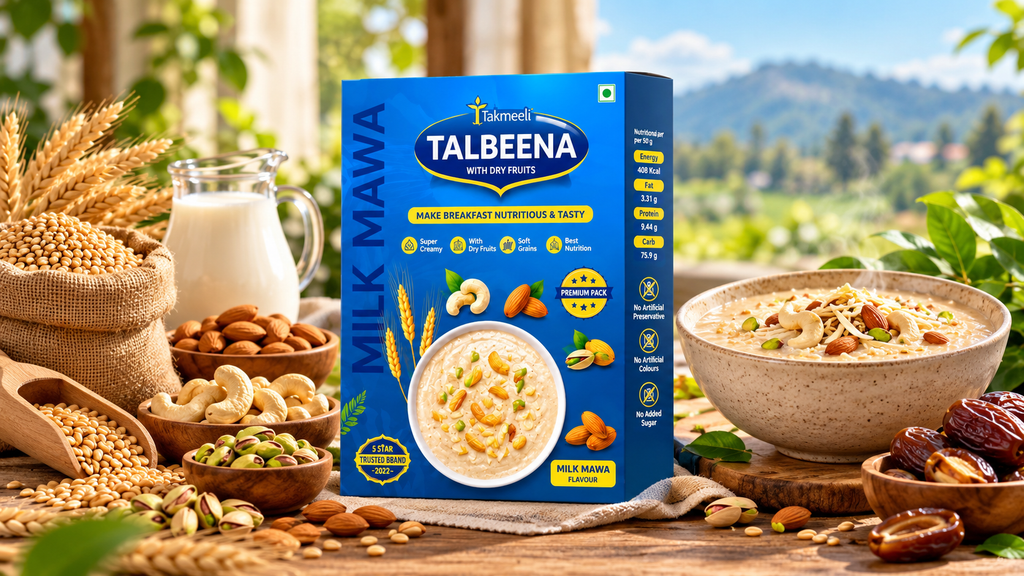
Talbeena is a traditional nourishing food prepared primarily with barley, dry fruits and dates. Simple in preparation yet rich in nutritional value, it has gained renewed attention among people looking for wholesome breakfast and wellness options. But what makes Talbeena special? The answer lies in the combination of ingredients. Barley provides complex carbohydrates and dietary fibre, including beta-glucan, while dry fruits contribute nutrients, healthy fats and plant compounds. Dates add natural sweetness and make Talbeena enjoyable without necessarily requiring refined sugar. The American Diabetes Association recognises barley as a whole grain and recommends whole grains as part of healthy eating patterns. This combination makes Talbeena suitable for different age groups when prepared thoughtfully and consumed in appropriate portions. Imagine a person who usually starts the morning with a highly processed, sugary breakfast. Replacing that routine with a warm bowl of Talbeena containing barley, nuts and a modest amount of dates can provide a more wholesome alternative. It is not a miracle food, nor does it need to be presented as one. Its real strength is its simplicity: familiar ingredients brought together in a convenient and satisfying meal.
Why Is Barley the Heart of Talbeena?
Barley is the foundation of traditional Talbeena, and its nutritional profile explains much of the interest surrounding this food. Unlike refined grains, whole-grain barley retains more of the grain’s naturally occurring fibre and nutrients. The American Diabetes Association includes whole-grain barley among its recommended whole-grain choices and notes that whole grains provide fibre along with vitamins and minerals. One particularly important component of barley is beta-glucan, a type of soluble fibre that has been extensively studied. Research reviews have examined barley beta-glucan for its potential effects on cholesterol and blood glucose management, while the FDA recognises an authorised health claim relating soluble fibre from barley and reduced risk of coronary heart disease when specific dietary requirements are met. Can this make Talbeena useful for people concerned about blood sugar? Potentially, particularly when it is made with whole barley and without large amounts of added sugar. Fibre can slow digestion and influence how carbohydrates affect blood glucose. The American Diabetes Association also notes that higher-fibre foods can help with fullness, digestion and blood-glucose management. Consider a simple caselet: a working professional wants a breakfast that keeps them satisfied through a busy morning. A bowl based on barley, complemented with nuts and a controlled quantity of dates, may provide a more substantial option than a breakfast dominated by refined carbohydrates. The key is not simply eating Talbeena, but preparing it intelligently.
What Are the Benefits of Talbeena?
The benefits of Talbeena come from the nutritional contribution of its individual ingredients. Barley supplies fibre and beta-glucan; nuts and other dry fruits can provide healthy fats, protein, minerals and additional fibre; and dates contribute natural sweetness along with carbohydrates and micronutrients. Is Talbeena good for digestion? Its barley content can contribute dietary fibre, which plays an important role in normal digestive health. Fibre also contributes to satiety, making a fibre-rich meal potentially more filling. Can Talbeena support heart health? Barley beta-glucan has been studied for its relationship with cholesterol, and authorised food-health claims recognise soluble fibre from barley in the context of reduced coronary heart disease risk when specified conditions are met. The dry fruits add another dimension. Almonds, walnuts and similar nuts contain unsaturated fats, fibre and other nutrients, although their calorie density means that portions should remain sensible. The dates provide sweetness, which can make the recipe appealing without depending on refined sugar. However, this does not mean that dates are “free” from blood-sugar considerations. They contain naturally occurring sugars and carbohydrates. So, is Talbeena automatically suitable for everyone simply because it contains natural ingredients? No. The overall recipe matters. A Talbeena prepared with whole barley, modest dates, unsalted nuts and no added sugar is nutritionally different from one containing large quantities of dates, sweeteners and calorie-dense additions.
Is Talbeena Suitable for People With Diabetes?
This is one of the most important questions surrounding Talbeena. Can people with diabetes eat Talbeena? In many cases, Talbeena can be incorporated into a diabetes-conscious eating pattern, particularly when it is prepared with whole barley, limited dates and no added sugar. However, it should not be described as a food that treats, cures or controls diabetes by itself. The American Diabetes Association recommends prioritising whole foods, limiting added sugars and choosing whole grains over refined grains as part of diabetes management. Barley is therefore an interesting base because of its fibre content and beta-glucan. But the addition of dates changes the carbohydrate content, and the quantity consumed matters. A useful caselet is someone with type 2 diabetes who enjoys sweet breakfasts. Instead of adding table sugar to a barley-based preparation, they might use a small quantity of chopped dates for flavour, combine it with nuts, and keep the overall serving moderate. They should still consider the carbohydrate content of the complete meal and monitor their individual blood-glucose response according to their healthcare professional’s advice. What about dry fruits? Unsweetened nuts can be a useful addition, but dried fruits may contain concentrated natural sugars, so the type and quantity matter. For anyone taking diabetes medication or using insulin, dietary changes should be considered alongside their established treatment and meal plan.
Frequently Asked Questions About Talbeena
1. What is Talbeena made of?
Talbeena is traditionally prepared using barley as its primary ingredient, with additions such as dates, almonds, walnuts and other dry fruits depending on the recipe. Milk or water may be used to create the desired consistency. A simple version can be prepared without refined sugar, allowing dates to provide natural sweetness.
2. Is Talbeena good for daily consumption?
For most people, Talbeena can be included as part of a balanced diet, particularly when it is prepared with whole barley and sensible quantities of nuts and dates. Its fibre content can contribute to digestive health and satiety. However, portion size and the complete recipe matter. A highly sweetened version should not be treated as equivalent to a simple, minimally processed preparation.
3. Is Talbeena beneficial for people with diabetes?
Talbeena made primarily with whole barley may fit into a diabetes-conscious diet because barley is a whole grain and provides dietary fibre and beta-glucan. However, dates contain carbohydrates and naturally occurring sugars, so they should be used in moderation. Talbeena is not a treatment or cure for diabetes, and people with diabetes should consider their individual carbohydrate requirements and medical advice.
4. Does Talbeena help with digestion?
Talbeena can contribute dietary fibre through barley and nuts. Fibre supports normal digestive function and can also help increase feelings of fullness. The American Diabetes Association notes that dietary fibre can support digestion and recommends increasing fibre gradually while maintaining adequate fluid intake. Individual tolerance can vary, especially when someone suddenly increases their fibre intake.
5. Can Talbeena be eaten for breakfast?
Yes. Talbeena can work particularly well as a breakfast because barley provides complex carbohydrates and fibre, while nuts and dry fruits can add texture and nutrients. It can be served warm and adjusted according to personal preference. For a balanced meal, keep added sweeteners low and consider the overall combination of protein, carbohydrates and fats.
6. Does Talbeena contain added sugar?
It does not have to. A naturally sweet Talbeena can be prepared using dates as one of the principal sweetening ingredients. However, dates themselves contain naturally occurring sugars and carbohydrates. Therefore, “no added sugar” does not mean “sugar-free.” For people managing diabetes or calorie intake, the quantity of dates should be considered along with the rest of the meal.
Talbeena’s appeal ultimately comes from its simplicity. Barley provides the foundation, dry fruits add nutritional richness and texture, and dates provide natural sweetness. When prepared with whole barley, moderate portions of dates and unsweetened nuts, Talbeena can become a wholesome addition to a balanced diet. Its potential value for people concerned about blood sugar comes primarily from the fibre-rich barley base—not from any claim that Talbeena itself can treat diabetes.